
From first call to a house that is comfortable.
Every visit follows the same six steps, from the first phone call to the maintenance plan that keeps the system healthy. Here is what happens, in what order and why.

- 01
You call or text
A real person asks about the symptoms, the age of the system and what you have noticed. Photos of the unit and its label help us come prepared.
A call, a text or the form - 02
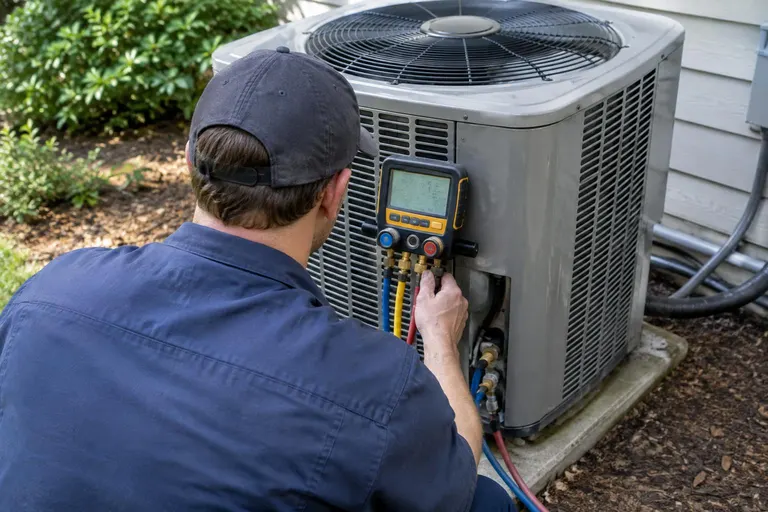
We measure and diagnose
We test, not guess: temperatures, pressures, airflow, electrical readings and the condition of the ducts, with the findings explained in plain words.
Gauges, meters and a flashlight - 03

We size and plan
If replacement makes sense, we calculate the load of the house instead of copying the old unit, and put the options in writing.
A load calculation and a quote - 04
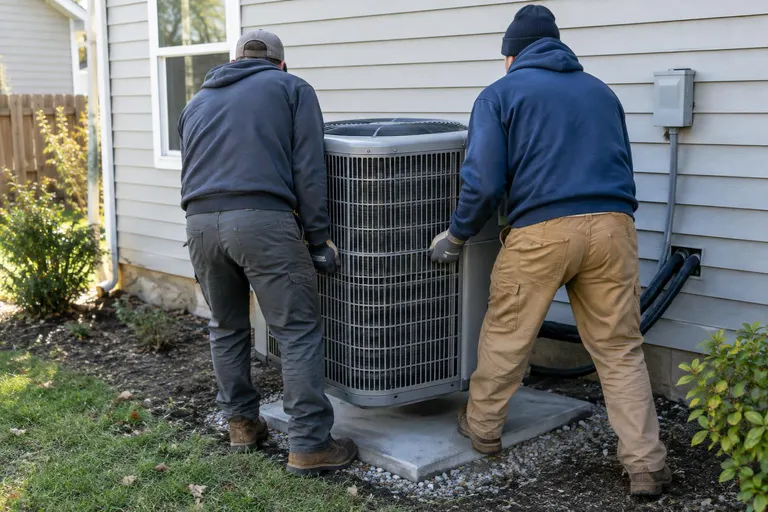
We install with care
Clean line sets, sealed duct connections, a level pad, a proper drain and a protected house, with the old equipment hauled away.
Drop cloths and a tidy truck - 05
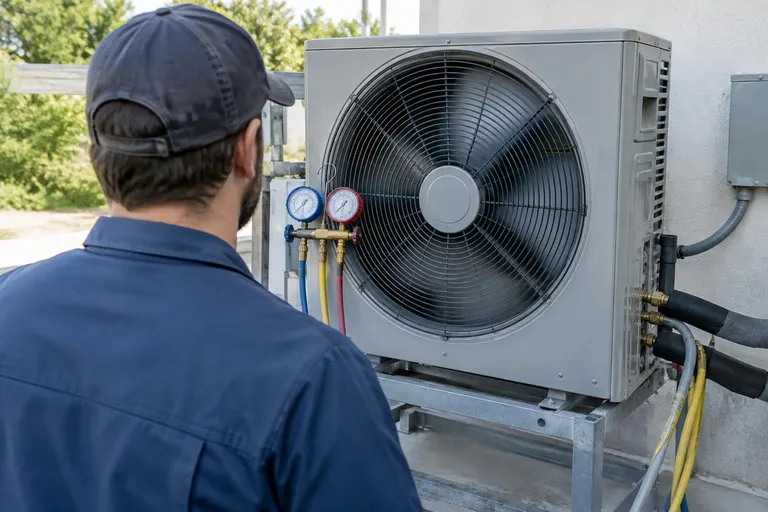
We start up and test
Every system is started and measured against the maker's targets, then we walk you through the thermostat and what to expect.
Startup readings in writing - 06
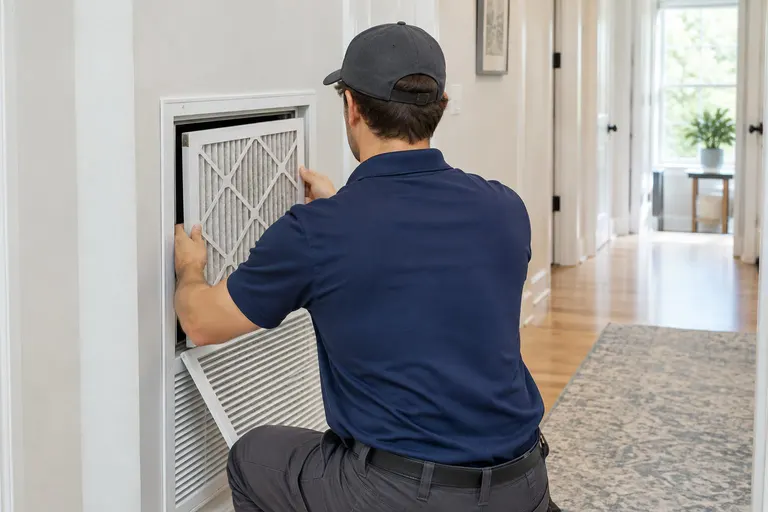
We keep it running
A maintenance plan puts tune-ups on a schedule, so small problems are found early and the readings are on record.
Reminders and priority booking
The clipboard, step by step.
Run the checks to see what a measured visit includes.
- Filter and airflowWe check the filter and measure airflow across the system.Clean or swap
- Temperature splitThe difference between the air going in and coming out shows how hard the system is working.Typically 15 to 20 degrees
- Static pressureHow hard the blower pushes against the ducts. Too high points to restrictions.Often under 0.5 in. wc
- Coil and drainA dirty coil or a clogged drain line is a common cause of water and warm air.Clear and flowing
- Refrigerant and pressuresReadings are compared with the maker's targets for the day.Within range
- ElectricalAmp draw, capacitors, contactors and wiring connections are tested and tightened.Tested and tight
- Burners and heat exchangerFlame, ignition, venting and the exchanger are inspected before the heating season.Clean flame, clear vent
- Thermostat and settingsCalibration, schedule and batteries are checked against what the house needs.Calibrated
A tune-up is a measured visit, not a quick look. The clipboard is the order we work in, and the readings go in your report so you can compare year to year.
- Readings written in your report, not just said out loud
- Photos of anything we find, so you can see it too
- A plain-English summary and what to watch next year
Your quick prep list.
- Write down what you notice, and when it happens
- Take a photo of the unit and its model label
- Note the age of the system and any recent repairs
- Clear a path to the indoor and outdoor equipment
- Try the Tonnage Finder or the Comfort Map
Six promises we keep.
We measure before we quote
Readings and a look at the ducts come first, so the plan fits the house.
The whole system gets a look
Equipment, ducts, filters and controls are checked as a team.
Everything in writing
Scope, price, schedule and equipment are written down before work starts.
Honest about repair or replace
If a repair makes sense, we say so. If it is time to replace, you see why.
A clean, careful visit
Floor protection, tidy work and the old parts hauled away.
A real person on the phone
Call or text and a real person answers.
Process questions
How do I get a price?
Fill in the form on any page, or call or text 615-431-3789. Photos of the unit and its label help us come prepared. Repairs are priced after a diagnosis, and replacements after a short visit, so the written price covers equipment, labor and extras.
Should I repair or replace my system?
A repair makes sense when the system is in its middle years and the fix is small compared with a new one. A big repair on an old or failing system is usually money better spent on replacement. We show you both options in writing, and our Life Clock shows where your equipment sits in its typical life.
How long does an installation take?
A straightforward replacement often takes about a day, and new ductwork, a new system in a new build or a multi-zone mini-split takes longer. You get a written schedule before we start, and we protect floors and clean up as we go.
How often should I have my system serviced?
Once a year for each system is a good habit: cooling in spring and heating in fall. A tune-up cleans, measures and tests, so small problems are found before they become breakdowns. A maintenance plan puts it on a schedule.
Start with the easy part.
Call, text a photo or fill in the form. We look, measure, plan, price and confirm before any work begins.